Guest Post for GreatScot! by Laura Carmichael @LallybrochLaura
With a sigh of happiness, I finished re-reading Shakespeare’s Richard III — a play I have tickets to see performed again soon. After seeing peace restored to England, I closed the book, and slipped it back onto the bookshelf. I then went online, where I was delighted to see a link to an article about another beloved author, Diana Gabaldon, and her Outlander series of books. That delight was marred by a sense of vexation at seeing these works referred to, yet again, as “Science Fiction.” Although I’m accustomed to seeing Gabaldon’s works labeled as “Science Fiction,” or even “Romance,” I felt puzzled at the heat of my irritation. Why, I asked myself, is this still so irksome to me? After all, I am a long-time Gabaldon reader, well used to the haphazard application of these genre labels to her work.
The answer was right there at eye-level on my bookshelves in the well-thumbed rows of books by two of the authors I most love: William Shakespeare and Diana Gabaldon. I’ve recently been re-reading several of both authors’ works — in preparation for my upcoming attendance at several Shakespeare play performances, and for Gabaldon’s new book and upcoming TV series. There on the shelves was the answer: it is exactly as appropriate to label Shakespeare a Science Fiction or Romance writer as it is to so label Gabaldon. From a genre perspective, there is no difference or distinction between these two authors.
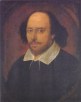 Let me explain. Both authors use varied plot elements to advance their characters into extreme, challenging circumstances. From these extremities both authors then skillfully reveal insights into What It Means to Be Human as the characters grapple with their challenges. Sometimes those plot elements are Science Fiction elements, and sometimes they are Romance elements — or Political, Adventure, Mystery, Humor, or any of a number of other elements. Yet both authors cover the entire spectrum of human experience, from boredom to ecstasy, silliness to sublimity, confusion to single-minded clarity, and on and on. Both authors use myriad devices to get their
  characters’ stories in motion, and those devices are never constraining to these authors, nor are they ever The Point. The Point is how the characters feel, think, act, learn, and change with the layers in their stories; The Point is how that in turn makes us, their audience, feel, think, act, learn, and change in our lives.
“Time travels in diverse paces with diverse persons” – As You Like It, W. Shakespeare
All right, well enough. All of the above duly noted, it is true the Outlander books use time travel to move characters into challenging situations. Given that, what is wrong with calling Gabaldon’s works Science Fiction? Or similarly, since they feature people in love, what is wrong with labeling them Romance novels? So what?
To answer that, let’s take Shakespeare as a comparison, starting with one example, Hamlet. Several of his greatest and most popular works rely on Science Fiction/Fantasy elements to get the characters in motion — including Macbeth, The Tempest, A Midsummer Night’s Dream, and Hamlet.
You may recall Hamlet begins with the “dreaded sight” of an “apparition.” It isn’t a figment of Hamlet’s mind, which would make it merely a psychological device. Others see it first, and bring it to Hamlet’s attention. The apparition gets all of the action of the play in motion by calling on Hamlet to revenge what the apparition alleges is his father’s “murder most foul.” Hamlet and the audience never find out what this supernatural being, claiming to be the ghost of Hamlet’s father,  really is. A shaken, distraught Hamlet fears it may be a demonic force trying to trick him into horrible acts; this is partly why Hamlet is unsure what actions to take. Like most great Science Fiction devices, it ultimately doesn’t matter what the apparition is, or how it got there. Indeed, throughout the rest of the play, it makes only one other brief appearance — and that one Hamlet may be imagining. What matters is that this fantastical force catapults the unwilling Hamlet, and thereby everyone around him, into the rest of the action of the story.
Macbeth, The Tempest, A Midsummer Nights Dream, Hamlet — all of these rely on unmistakable Science Fiction plot elements to propel the characters into the situations where we see what stuff they (and we) are made on. Yet if we were to read news articles containing phrases such as “noted Science Fiction author William Shakespeare” or “Shakespeare’s greatest work, the Sci-Fi/Fantasy play Hamlet,” we would feel something was rotten. Why? After all, those descriptors are accurate, as far as they go.
And there’s the rub. While they are accurate as far as they go, they do not go far enough. This overly reductive labeling is inaccurate because of its ludicrous, woeful inadequacy.
It’s like explaining America to a potential tourist by only describing Las Vegas — which would create an odd, misleading image. When they later saw Yosemite, they would wonder why we’d spoken only of gambling and sparkling lights — or worse, they might never see Yosemite at all.
How Do I Love Thee? (Haute Bawdy & Hot Bodies)
 Gabaldon’s works have also often been labeled as Romance novels and stocked in that section of bookstores. And, like Gabaldon, Shakespeare wrote about humans in love and in lust — requited and unrequited, enduring and transactional, transformative and twisted. Both authors are superb at evoking these feelings in their audience, and generating empathies and insights we find so compelling we must come back for more. They are also both superb at showing us the bawdy and comedic aspects of our species’ amatory activities.
Yet most Shakespearean aficionados would cringe to hear Shakespeare described merely as “Romance author William Shakespeare.” Why? None of his works, even those with the greatest couples, love scenes and quotable-quotes, is merely a Romance. While Outlanders love Jamie and Claire — much as generations have loved Benedick and Beatrice — Outlander is not merely a Romance, any more than Much Ado About Nothing is.
“What’s Past is Prologue” – The Tempest, W. Shakespeare
Although Shakespeare pre-dates Gabaldon by 400 years, they share the same wonderful predicament — they have each created their own genre. If Shakespeare started out today, he would likely be as mislabeled as Gabaldon is. There is some indication he was mislabeled in his own time, and found it irksome: he pokes sardonic fun at the way his contemporaries classify works, as Polonius recites a silly litany of genres “tragedy, comedy, history, pastoral, pastoral-comical, historical-pastoral, tragical-historical, tragical-comical-historical-pastoral, scene individable, or poem unlimited” to Hamlet. Continue reading →












 Great Scot!