Revised and Improved – So what is your ‘Official Outlander name’ in Gàidhlig?

Note that I have reworked this list and added additional names. First, the list is now alphabetized by English name which I hope will make it much easier to use. I have also come across a list of name translations from a book circa the early 1900’s thanks to KristenK! These names have been added to the list but I don’t have pronunciations for them.

Welcome to the Clan!

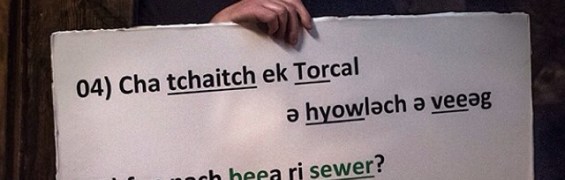
Àdhamh Ó Broin (@an_comhghallach), Gàidhlig ambassador extraordinaire and tutor to the Outlander cast and crew, invites you to find your name below and then use your imagination to hear him (or Sam if you prefer) saying the following in his best ‘How to Speak Outlander’ voice:

 “Say it with me,  __insert your Gàidhlig name here__ . You now have your own official OUTLANDER name! Latha math leibh!”

If there is no pronunciation guide given, then it is pronounced the same as English or I don’t have a pronunciation for the name yet. Also, keep in mind that because some of our more modern names don’t truly exist in Gàidhlig, what is given here is an approximation using the equivalent Gàidhlig spelling for the English sounds.

Abigail –  Abagail /AHbagle/ ‘gle’ like in waggle

Adam – Àdhamh /AHgiv/

Adeline – Àdailin /AHdaleen/

Adriana – Driàna /DreeAHna/

Agnes – Una

Alana – Alàna / /

Albert – Ailbert

Alice – Ailis

Alexander – Alasdair

Alison – Àlasan / ALison

Allan – Ailean

Amber – Òmarag /AWmarak/

Continue reading

Outlander Episode 101 – More Gàidhlig bits

If you missed my first post last week covering episode 101: Sassenach, you can find it here. However, after—uh hem—several more viewings, I have managed to pick out just a few more tidbits of Gàidhlig from the inaugural episode of Outlander.

7:55 The phrase that Mrs. Baird says about Saint Odhran


Several people have asked me what that first bit of Gàidhlig we hear is right after Claire hears the gunshot. It appears to be something that Angus yells at the Redcoats right before firing at them. I’m happy to say that it has finally been identified! As might be expected, it’s not very complimentary of the soldiers. 😉

41:00 Angus fires gun and yells at the Redcoats

“A bhalgair” /ə VALAgir/ (ya bastard!) (filthy cur, really)

Thanks to @VenusOctober for asking Àdhamh about this one when Murtagh brings Claire into the cottage (44:35):


52:31 Jamie to Dougal about the ambush

I can’t catch the exact words but there is something about lass and redcoats. 🙂

53:19 Someone sees the Redcoats and yells

Shaighdearan – soldiers ( I think this is correct but not confirmed.)

54:30 Jamie to the horse

Stad! – stay! (Be sure to admire Sam’s nice plaid twirl)

56:16 Jamie to Claire to drink the whisky

deoch – drink

OK. That’s all I have to add at this point. If I decipher anything else, I’ll be sure to update.

Thanks to the free preview for episode 101, I was able to live tweet a bit of the Gàidhlig during the premiere Saturday night. Unfortunately though, I won’t have that advantage going forward, so you will have to come to the blog to find out about the Gàidhlig.

Updated 8/6/2014 Outlander Episode 101: Sassenach – The Gàidhlig Bits I Could Decipher

So in spite of being at the San Diego premiere and also attending an advanced screening of Outlander Episode 101 last Wednesday, I was also one of the many Outlanders who tuned into Starz at 12:01 August 2 to watch the first Outlander episode yet again. On my initial viewing of the episode titled “Sassenach”, I was only able to pick out a couple of words of the Gàidhlig dialogue. However, after several more viewings (more than 5 but less than 10, but who’s counting?), I have come up with the following list of Gàidhlig I believe I have been able to understand. There is absolutely no guarantee that it is correct and I am quite sure some of the grammar is likely incorrect.  🙂 For words that I could find audio pronunciation files, I have linked them.

So here goes my best attempt. Hopefully the list will go longer with each episode.

Note:  Some people might consider my descriptions of the scenes below a bit of a spoiler, so consider yourself warned.

Outlander Episode 101: Sassenach

The timings listed are from playing the episode through the Starz.com website.

In the woods:

44:23 Murtagh to Claire after he knocks out BJR

Trobhad! – Come!

In the cottage:

45:08 When Murtagh brings Claire in:

Mhurchaidh – Murtagh, sounds like: ah vur-ah-hee because of lenition
Creag an Dùin – Craig na Dun

Murtagh says “caileag shassanach” (English girl). The other man asks “an do ghoid thu as a leapaidh, a bhalaich?” (did you steal/take her from her bed, lad?) [Thanks to Lori and Laurie for this bit. Confirmed by Àdhamh.]

46:59 Someone hands Jamie the whisky

Taing dhut – Thanks.

48:15 Claire puts Jamie’s arm back in joint:

Taing Dhia! – Thank God

51:00 After Claire helps wrap the plaid, Jamie says something to her.

Seo, a-nis. – Here, now. [Not positive yet. Have asked Àdhamh for confirmation. Confirmed by Àdhamh and he says Sam improvised this himself.]

51:18 Dougal to the others

Trobhad – Come

On the road:

52:49 Jamie to Claire

Clach a’ Choillich – Cocknammon Stone

54:07 Jamie War Cry

Tulach Ard!

56:53 After Jamie brings Claire back after the ambush:

Slàinte mhath – Good health! or Cheers!

58:53 When Jamie comes to as Claire cleans his shoulder with alcohol:

Tha mi gasta. – I’m fine.


Resources

For those interested, my go to resource, other than Àdhamh Ó Broin, is the Dictionary available at LearnGaelic.Net. The dictionary is very good and easy to use for both English->Gaelic as well as Gaelic->English translations.  There are also audio pronunciation files for many of the Gàidhlig words and phrases.

How to Speak Outlander Lesson 12: Tha Gaol Agam Ort, Cape Breton and the Giveaway

With anticipation of the Outlander premier episode on August 9th reaching fever pitch, I have only just now realized that the series beginning will also mark the end of some of our beloved pre-show traditions. Starz has called this to our attention with the release of the final ‘How to Speak Outlander’ video. However, if this series of videos featuring Àdhamh, Sam and others has to end, what a way to go out! I predict the ringtones and notifications of Outlanders worldwide are changing right now.

How to Speak Outlander Lesson 12: Tha Gaol Agam Ort

Wow! As final episodes go, this one is a keeper. Who among us hasn’t wanted to hear ‘my love is upon you’ from Jamie Fraser?  I think Sam must have a secret though, there’s a definite gleam in his eye at the end of this video. I wonder how long he’ll keep it? Until August 9th maybe?

Meanwhile in Cape Breton…

I have been having tons of fun in Cape Breton, Nova Scotia. So far I have attended a Celtic square dance and made a visit to the Highland Village museum at Iona.  I promise that I am working on a blog post that will even have videos, but I have to find some better Internet connectivity before I can upload them! In the meantime, here are some quick pictures to tide you over.

And don’t forget…

Only 4 more days to enter the first ever GreatScot! giveaway. Click here to enter!

What’s in a Name? Gaelic vs Gàidhlig in the Outlander World

So as we roll into summer, we’re only 47 days away from the premiere episode of Outlander. (Unless you’re lucky enough to win one of the coveted invitations to the July 25 Gala premiere or July 30 Time Warner Cable preview. Anybody need a +1?) As existing Outlander fans though, we need to be prepared for the multitude of questions that will come our way as the rest of the world falls for Outlander.

One question I’ve had, and that I’ve heard others ask as well, is ‘what is the difference between the pronunciation of Gaelic and Gàidhlig?’

Well, what better source for a definitive answer than Outlander’s own Gàidhlig expert and tutor, Àdhamh Ó Broin? Here is what Àdhamh has to say on the subject:

What is the correct pronunciation of “Gaelic”? “The correct pronunciation is actually exactly as it looks. In the language itself, the word most commonly encountered is Gàidhlig /GAAHLeek/ (although in parts of Argyll, it is more like /GELLeek/ ‘e’ as in “get”) and this has meant that many people now say /Gahlick/ in Eng. But in truth this is more like a nickname for the language than a proper name. Scottish, Irish and Manx (the Isle of Man) are in fact all Gaelic -like “gay” & “lick” stuck together. This a language family, of Gaelic or Goidelic languages, not one particular language. The correct historical terms in English for the three sister tongues within this are exactly as above: Scottish, Irish and Manx. In fact, out of the six Celtic languages, only Scottish has ceased to be referred to by its historical national title, which is a matter of some regret, as it is the only language prior to the arrival of English ever to have been spoken throughout the country and its culture gave us most everything -from kilts, to pipes, to black pudding- we now associate with Scottishness. Another point to address would be the myth that has been floating about that Irish is /GAELik/ & Scottish is /GAHLik/ but if this were true, then the Scots who speak the language would be referred to as Gahls rather than Gaels which we know is not the case.

So which one to use? In Outlander, we have stuck with /GAHLik/ because this is the preferred term of the majority of Scottish speakers. There is no point in confusing matters for the sake of it. But were you to ask me my preferred pronunciation? That would be just as it looks and how it is pronounced in Nova Scotia to this day, /GAELik/!”

So there we have it. Originally there was probably no difference in the pronunciation of the two terms but for most of today’s Scots, and in Outlander, /GAHLik/ is the preferred pronunciation.

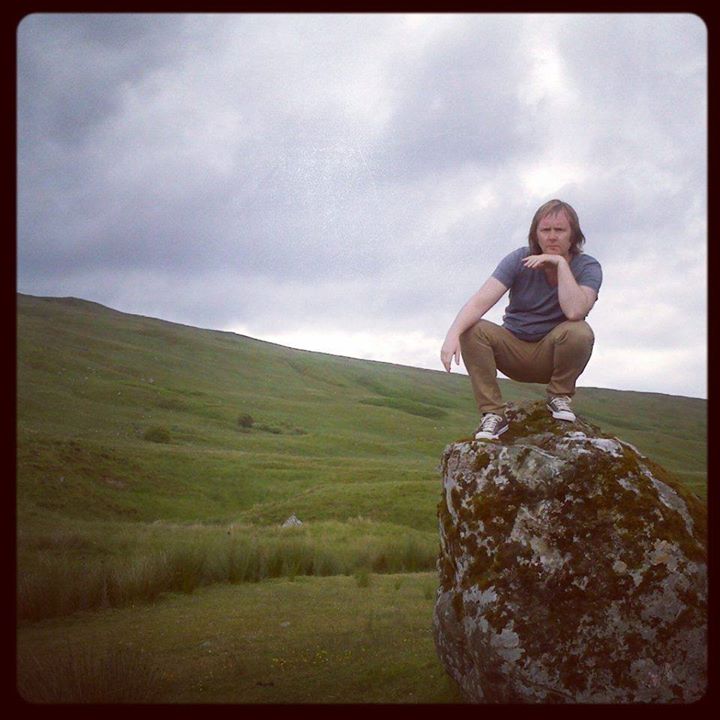
So as an added bonus, here is a picture that Àdhamh posted on his Facebook page this weekend.

CLACH NA CAILLICHE
The Witch’s Stone
10402877_730276833681072_7346676297227475320_n
This stone was a boundary marker between Gleann Dà Ruadhail (glen of two red streams) and Srath Lachainn (Lachlan’s valley) parishes in my home district of Cowal, Argyll

The “cailleach” associated with this stone was believed to be able to change shape to become a cow and return to human form.
An excavation has just been completed on the other side of the modern road that now intersects the area and they found an old inn where the drovers would drink their fill and sleep over for the night.
The glen is almost devoid of human activity now, save for the whoosh of the odd passing car moving between the two parishes…